four petals joining to form a flower

Research and Results

A growing number of published studies, including numerous randomized controlled trials and other rigorous research, demonstrate the effects and quality of the Parents as Teachers model. Parents as Teachers works with a network of researchers to ensure independent research and evaluations are conducted that have integrity, credibility and minimize bias.

Evaluations have been supported by various states, school districts, private foundations, universities, and research organizations. With each new evaluation, we continue to learn about the children and families served by Parents as Teachers and the long-term impacts on communities

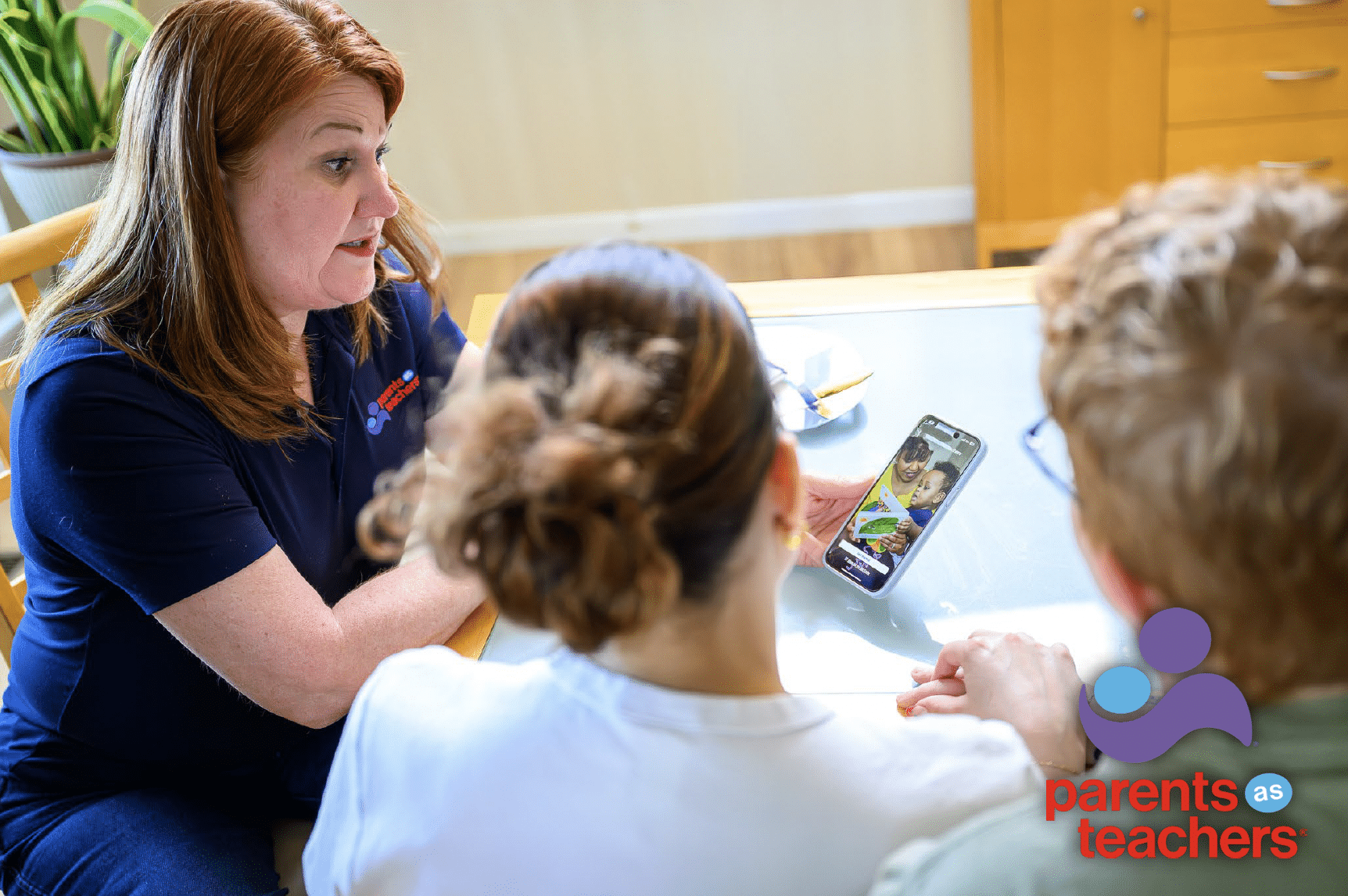
Woman in a navy polo showing two seated people a parenting app video on a smartphone at a kitchen table, Parents as Teachers logo visible.

Research results from over 40 years of Parents as Teachers’ studies show:

Provide early detection of developmental delays and connection to services

Parents as Teachers affiliates identify approximately 26,000 potential developmental delays and health concerns annually. Early identifications of delays can lead to interventions being applied in a timely manner.

View Sources

  • Parents as Teachers (2021). 2020-2021 Parents as Teachers affiliate performance report summary. St. Louis, MO.
  • Pfannenstiel, J., Lambson, T., & Yarnell, V. (1991). Second wave study of the Parents as Teachers program. Overland Park, KS: Research & Training Associates

Prevent child abuse and neglect

Parents as Teachers families practice better home safety, have fewer maltreatment reports, a 22% lower likelihood of substantiated child maltreatment, reduced CPS reinvolvement, and improved protective factors like parental resilience and children’s social-emotional competence.

View Sources

  • McCombs-Thornton, K., Wang, Y., & Sturmfels, N. (2023). Parents as Teachers family outcomes: New insights from the Mother and Infant Home Visiting Program Evaluation (MIHOPE). Parents as Teachers National Center. https://patorgstg.wpenginepowered.com/wp-content/uploads/2024/10/PAT-Family-Outcomes-MIHOPE.pdf
  • Parents as Teachers (2014). Internal Report on the Parenting Reflection Survey Results. St. Louis, MO.
  • Chaiyachati, B., Gaither, J., Hughes, M., Foley-Schain, K., & Leventhal, J. (2018). Preventing Child maltreatment: Examination of an established statewide home-visiting program. Journal of Child Abuse and Neglect, 49, 476-484. https://doi.org/10.1016/j.chiabu.2018.02.019
  • Wagner, M. & Clayton, S.L. (1999). The Parents as Teachers Program: Results from Two Demonstrations. The Future of Children: Home Visiting: Recent Program Evaluations, 9(1), 91-115.
  • Jonson-Reid, M., Drake, B., Constantino, J., Tandom, M., Pons, L., Kohl, P., Roesch, S., Wideman, E., Dunnigan, A., & Auslander, W. (2018). A randomized trial of home visitation for CPS-Involved families: The moderating impact of maternal depression and CPS history. Child Maltreatment, 23, 281-293. https://doi.org/10.1177/1077559517751671
  • (n.d.). 2014 Maine Home Visiting Summary Report. Augusta, ME: Maine Department of Health and Human Services.

Increase in parent knowledge of early childhood development and improve positive parenting practices

Parents are more likely to feel confident in their parenting, be sensitive toward their children, engage in early literacy activities, create a safe and enriching home environment, and actively participate in their children’s education.

View Sources

  • Wagner, M., Spiker, D. & Linn, M.I. (2002). The effectiveness of the Parents as Teachers program with low-income parents and children. Topics in Early Childhood Special Education, 22(2), 67-81. https://doi.org/10.1177/02711214020220020101
  • Pfannenstiel, J., Lambson, T., & Yarnell, V. (1996). The Parents as Teachers program: Longitudinal follow-up to the second wave study. Overland Park, KS: Research & Training Associates.
  • Pfannenstiel, J. (2015). Evaluation of the I3 validation of improving education outcomes for American Indian children. Kansas City, KS: Research and Training Associates, Inc.
  • Albritton, S., Klotz, J., & Roberson, T. (2004). The effects of participating in a Parents as Teachers program on parental involvement in the learning process at school and home. E-Journal of Teaching and Learning in Diverse Settings, 1(2)188-208.
  • Neuhauser, A., Ramseier, E., Schaub, S., Burkhardt, S. C., & Lanfranchi, A. (2018). Mediating role of maternal sensitivity: enhancing language development in at‐risk families. Infant Mental Health Journal39(5), 522-536. https://doi.org/10.1002/imhj.21738
  • Institute for Families in Society, University of South Carolina & Pacific Research & Evaluation, LLC. (2021). South Carolina First Steps to School Readiness Parents as Teachers External Evaluation FY16-17 to FY18-19.
  • Wagner, M., Cameto, R., & Gerlach-Downie, S. (1996). Intervention in support of adolescent parents and their children: A final report on the Teen Parents as Teachers Demonstration. Menlo Park, CA: SRI International.
  • Wagner, M., Iida, E., & Spiker, D. (2001). The multisite evaluation of the Parents as Teachers home visiting program: Three-year findings from Winston-Salem, NC. Menlo Park, CA: SRI International.
  • McCombs-Thornton, K., Wang, Y., & Sturmfels, N. (2023). Parents as Teachers family outcomes: New insights from the Mother and Infant Home Visiting Program Evaluation (MIHOPE). Parents as Teachers National Center. https://parentsasteachers.org/wp-content/uploads/2024/10/PAT-Family-Outcomes-MIHOPE.pdf
  • LeCroy & Milligan Associates, Inc. (2024). Parents as Teachers Randomized Control Trial in Arizona: 6- and 12-Month Outcomes Report. Tucson, AZ. https://www.lecroymilligan.com/_files/ugd/4d0a9d_3729c8f41ef34a2d9dfeb80b81c3073b.pdf
  • Parents as Teachers (2014). Internal Report on the Parenting Reflection Survey Results.
  • Ding, X., LaBrenz, C. A., Nulu, S., Gerlach, B., & Faulkner, M. (2023) Impact of Parents as Teachers on parenting-related protective factors: A pre- and post-evaluation. Children and Youth Services Review, 147, 106834. DOI: 10.1016/j.childyouth.2023.106834  https://doi.org/10.1016/j.childyouth.2023.106834

Increase children’s school readiness and success

Children in Parents as Teachers demonstrate stronger adaptive behavior, self-control, cognitive and language development, communication skills, academic performance, and have lower absenteeism and suspension rates.

View Sources

  • Wagner, M., Spiker, D. & Linn, M.I. (2002). The effectiveness of the Parents as Teachers program with low-income parents and children. Topics in Early Childhood Special Education, 22(2), 67-81. https://doi.org/10.1177/02711214020220020101
  • Pfannenstiel, J. (2015). Evaluation of the I3 validation of improving education outcomes for American Indian children. Research and Training Associates, Inc. Kansas City, KS.
  • Institute for Families in Society, University of South Carolina & Pacific Research & Evaluation, LLC. (2021). South Carolina First Steps to School Readiness Parents as Teachers External Evaluation FY16-17 to FY18-19.
  • McCombs-Thornton, K., Wang, Y., & Sturmfels, N. (2023). Parents as Teachers family outcomes: New insights from the Mother and Infant Home Visiting Program Evaluation (MIHOPE). Parents as Teachers National Center. https://parentsasteachers.org/wp-content/uploads/2024/10/PAT-Family-Outcomes-MIHOPE.pdf
  • LeCroy & Milligan Associates, Inc. (2024). Parents as Teachers Randomized Control Trial in Arizona: 6- and 12-Month Outcomes Report. Tucson, AZ.
  • Schaub, S., Ramseier, E., Neuhauser, A., Burkhardt, S., Lanfranchi, A. (2019). Effects of homebased early intervention on child outcomes: A randomized controlled trial of Parents as Teachers in Switzerland. Early Childhood Research Quarterly, 48, 173-185. https://doi.org/10.1016/j.ecresq.2019.03.007
  • Drotar, D., Robinson, J., Jeavons, I., & Kirchner, H.L. (2009). A randomized controlled evaluation of early intervention: The Born to Learn™ curriculum. Child: Care, Health & Development, 35(5), 643-643. https://doi.org/10.1111/j.1365-2214.2008.00915.
  • Pais, J., & Sexer, L.P. (2023). The effectiveness of a Parents as Teachers home visitation program on school readiness: An application of Complier Average Causal Effect analysis. Journal of Evidence-Based Social Work, 20(5). https://doi.org/10.1080/26408066.2023.2201233
  • Fields ME, Hoyt-Drazen C, Abel R, et al. (2016). A pilot study of parent education intervention improves early childhood development among toddlers with sickle cell disease. Pediatr Blood Cancer, 63(12): 2131–2138. DOI: 10.1002/pbc.26164
  • LeCroy, C. W., Nisbet, K. M., & Schmidt, M. C. (2024). Randomized controlled trial of the parents as teacher home visiting program: Outcomes of the intervention on families at six-month follow-up. Children and Youth Services Review, 165, 107875. https://doi.org/10.1016/j.childyouth.2024.107875
  • Törmänen, M., Schaub, S., Ramseier, E., Koch, C., Kalkusch, I., Rodcharoen, P., Neuhauser, A., Lanfranchi, A., & Klaver, P. (2024). How do psychosocial stress of the family and early-term birth affect the development of children’s executive functions? Using Baileys Scale III as a measurement for executive functions in children between 0 and 3 years. Frontiers in Developmental Psychology, 3, 1503647. https://doi.org/10.3389/fdpys.2025.1503647Follow link
  • Lahti, M., Evans, C.B.R., Goodman, G., Cranwell Schmidt, M., & LeCroy, C.W. (2019). Parents as Teachers (PAT) home-visiting intervention: A path to improved academic outcomes, school behavior, and parenting skills. Children and Youth Services Review, 99, 451-460. https://doi.org/10.1016/j.childyouth.2019.01.022

Improve parent, child, and family health and well-being

Parents as Teachers mitigates the harmful effects of early life stress, promoting long-term mental health benefits for children in high-risk families while reducing parental and family stress. Children in the program have higher well-child visit attendance, better sleep and self-regulation, and healthier behaviors, while caregivers show improved health literacy, self-care, and reduced obesity risk through better nutrition and physical activity.

View Sources

  • Wagner, M., Iida, E., & Spiker, D. (2001). The multisite evaluation of the Parents as Teachers home visiting program: Three-year findings from Winston-Salem, NC. Menlo Park, CA: SRI International.
  • LeCroy & Milligan Associates, Inc. (2024). Parents as Teachers Randomized Control Trial in Arizona: 6- and 12-Month Outcomes Report. Tucson, AZ. https://www.lecroymilligan.com/_files/ugd/4d0a9d_3729c8f41ef34a2d9dfeb80b81c3073b.pdf
  • Gardini, E., Schaub, S., Neuhauser, A., Ramseier, E., Villiger, A., Ehlert, U., . . . Turecki, G. (2020). Methylation of the glucocorticoid receptor promoter in children: Links with parents as teachers, early life stress, and behavior problems. Development and Psychopathology, 1-13https://doi.org/10.1017/S0954579420001984
  • LeCroy & Milligan Associates, Inc. (2022). Impact of the COVID-19 Pandemic and Virtual Service Delivery on Parents as Teachers Families and Parent Educators. Tucson, AZ.
  • Schaub, S., Ramseier, E., Neuhauser, A., Burkhardt, S., Lanfranchi, A. (2019). Effects of homebased early intervention on child outcomes: A randomized controlled trial of Parents as Teachers in Switzerland. Early Childhood Research Quarterly, 48, 173-185. https://doi.org/10.1016/j.ecresq.2019.03.007
  • Carroll, L., Smith, S., & Thomson, N. (2015). Parents as Teachers Health Literacy Demonstration Project: Integrating an Empowerment Model of Health Literacy Promotion Into Home-Based Parent Education. Health Promotion Practice, 16(2), 282-290.
  • Haire-Joshu, D., Elliott, M.B., Caito, N.M., Hessler, K., Nanney, M.S., Hale, N., Boehmer, T.K., Kreuter, M., Brownson, R.C. (2008). High 5 for Kids: The impact of a home visiting program on fruit and vegetable intake of parents and their preschool children. Preventive Medicine, 47, 77-82. https://doi.org/10.1016/j.ypmed.2008.03.016
  • Cahill, A., Haire-Joshu, D., Cade, WT., Stein, R., Woolfolk, C., Moley, K., Mathur, A., Schechtman K., & Klein, S. (2018). Weight control program and gestational weight gain in disadvantaged women with overweight or obesity: A randomized clinical trial. Obesity, 26(3), 485-491. https://onlinelibrary.wiley.com/doi/pdf/10.1002/oby.22070
  • Haire-Joshu, D., Cahill, A. G., Stein, R. I., Todd Cade, W., Woolfolk, C. L., Moley, K., Mathur, A., Schwarz, C. D., Schechtman, K. B. & Klein, S. (2019). Randomized controlled trial of home-based lifestyle therapy on postpartum weight in underserved women with overweight or obesity. Obesity, 27, 535-541. https://doi.org/10.1002/oby.22413
  • Haire-Joshu, D., Schwarz, C., Steger-May, K., Lapka, C., Schechtman, K., Brownson, R., & Tabak, R. (2018) A randomized trial of weight change in a national home visiting program. American Journal of Preventative Medicine, 54(3), 341-351. https://doi.org/10.1016/j.amepre.2017.12.012
  • Traube, D. E., Palmer Molina, A., Kemner, A., & Henk, J. (2022). Perinatal mental health support and early childhood home visitation during COVID-19. Prevention Science, 23(2), 260-270.
    https://link.springer.com/article/10.1007/s11121-021-01313-9

Improve family economic well-being

Parents as Teachers caregivers are more likely to gain employment, pursue higher education, and improve family economic self-sufficiency, with mothers experiencing significant benefits in parenting and child development. Families also show increased educational achievement and greater awareness and utilization of financial resources like the Earned Income Tax Credit, while reducing neglect.

View Sources

Strengthen community capacity and connectedness

Parents as Teachers strengthens family connections to community resources, increasing referrals and follow-through, while enhancing social support. Parents in the program are more engaged in their children’s education, enrolling them in preschool and actively participating in school activities.

View Sources

  • Heinemeier, S., & D’Agostino, A. (2017). South Carolina First Steps Evaluation Of Parents as Teachers 2008-2016. South Carolina State Documents Depository.
  • LeCroy & Milligan Associates, Inc. (2024). Parents as Teachers Randomized Control Trial in Arizona: 6- and 12-Month Outcomes Report. Tucson, AZ.
  • Arteaga, I., Carlo, G., & Martinez, M. (2018). Evaluation of the Right from the Start Program: Final Report. St. Louis, MO: Parents as Teachers National Center.
  • Albritton, S., Klotz, J., & Roberson, T. (2004). The effects of participating in a Parents as Teachers program on parental involvement in the learning process at school and home. E-Journal of Teaching and Learning in Diverse Settings, 1(2), 188-208.
  • Zigler, E., Pfannenstiel, J., & Seitz, V. (2008). The Parents as Teachers program and school success: A replication and extension. Journal of Primary Prevention, 29, 103-120. https://doi.org/10.1007/s10935-008-0132-1

No results found.

Are you currently conducting an evaluation of Parents as Teachers or are you interested in conducting research?

We strongly encourage evaluation of Parents as Teachers at the local and state levels. If you are interested in conducting a Parents as Teachers evaluation, please contact us:

Name(Required)
Translate »