

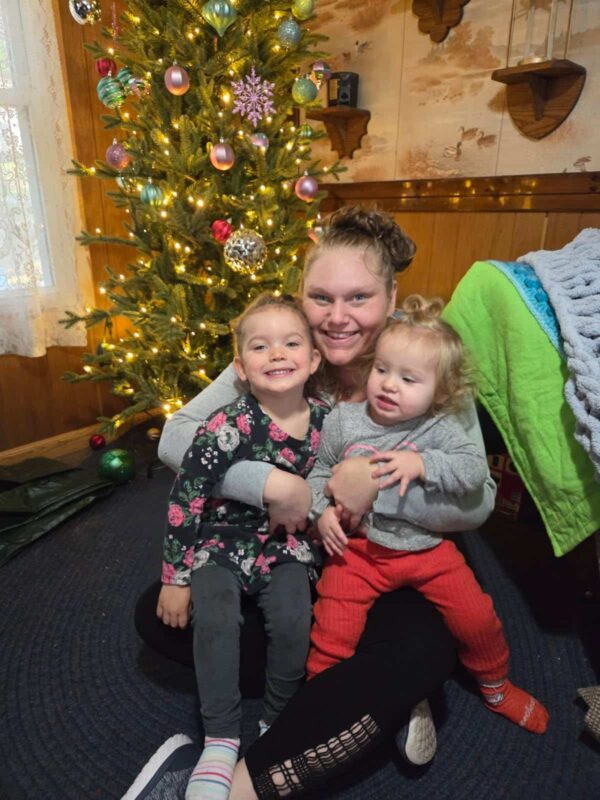
 Samantha Breton got the call that changed her life during a break from one of her two jobs.
At the time, she worked between 80 and 90 hours a week; she’d arranged a makeshift bed in the back of her car so that she could grab some sleep without wasting time driving home. Family life wasn’t in her plans.
“I was never gonna have kids,” she said.
But the call changed everything. Samantha had the choice to provide a home for a baby who would be removed from her biological mother’s custody when she was born; the mother had been using substances during pregnancy.
Her family discouraged her, apprehensive about the long-term effects the substances might have on the child and what that would mean for Samantha’s long-term involvement in her care.
Samantha’s response? Caring for a child is a parent’s job. If she were the parent, she would do the job.
“The second thing was,” she said, “it wasn’t her fault, you know? She didn’t do this to herself.”
Samantha worried, too, about who would care for this baby if she said no. What she knew for sure is that she herself would give her all.
And so she said yes – and the journey began.
Affected by seven substances at birth, the newborn began her life in the NICU. As a nurse placed her into Samantha’s arms for the first time, she began seizing – an effect of addiction withdrawal.
“I tried to give her back to the nurse,” Samantha said, “and the nurse said, ‘No, you need to hold her, because it’s more dangerous if you give her back to me.”
It was the first of countless lessons about the development of babies born addicted. And Samantha was ready to learn.
“I signed up for everything,” she said, “because I had no idea, you know? I was just like …. I don’t know how to take care of a baby, let alone a baby with needs that I don’t know about.”
One of her opportunities to learn came through Maine Families, Kennebec Valley Community Action Program, a Parents as Teachers affiliate. She was connected with Crystal LaBreck-Harrod, a parent educator who began regular home visits with the new family, focusing on their strengths.
“Here at Maine Families …. We’re not looking at it with the lens of deficit,” said LaBreck-Harrod. “We’re really building the family from any area that they need.”
Crystal guided Samantha in early intervention for developmental steps that could have otherwise grown into larger issues. For example, her young child had difficulty with eye tracking, but once Samantha implemented a toy with lights moving at adjustable speeds, she saw improvements.
Safety, too, was a topic of support, from sleep practices to safety latches and outlet plugs. While Samantha received information from different sources – the hospital, her bassinet’s instruction manual – it was Crystal who brought things to a practical level.
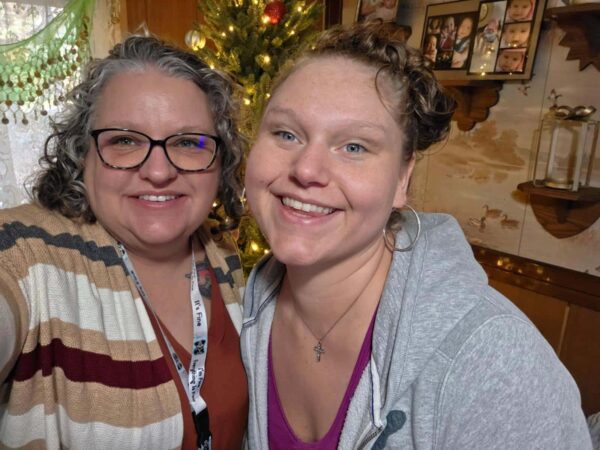 “I feel like she helped me tremendously with all that stuff,” Samantha said.
For first-time caregivers, parent educators can serve as a sounding board as they observe and question various behaviors and experiences in their children. For a first-time caregiver raising a child born addicted to substances, this kind of guidance also accommodated adjusted understandings of developmental norms.
As Samantha’s child grew, however, any apprehension about the long-term effects of substances disappeared. Slowly but surely, her seizures stopped. Specific medical concerns resolved. Her speech and motor skills are right on track.
“She is a very spirited three-year-old child that is showing no signs [of substance effects],” Crystal said. “And she is spectacular.”
This spectacular three-year-old is now also officially Samantha’s daughter – she was adopted in a ceremony that Crystal also attended, calling it a “golden day.” From Crystal’s point of view, though, Samantha’s role in her daughter’s journey had been clear from the start.
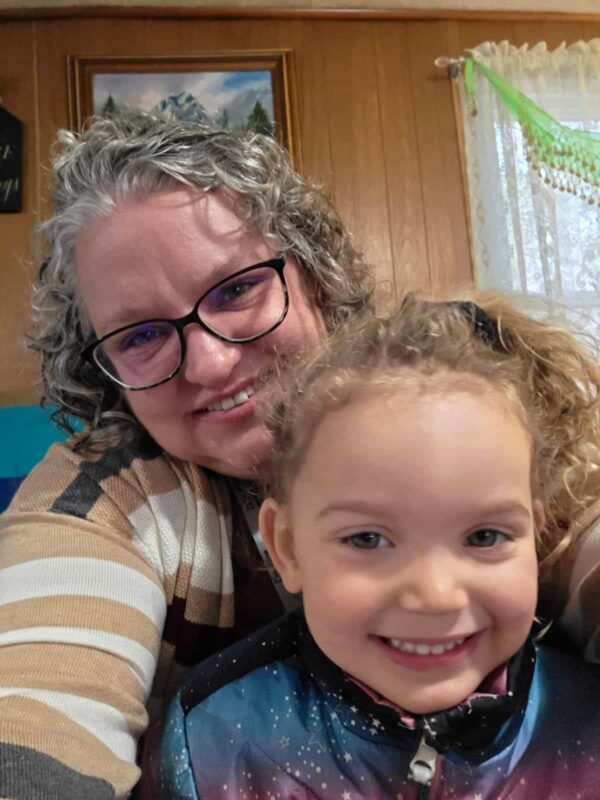 “She took it on bravely and she took it on with intent that she was never going to give up on this kiddo,” Crystal said. “That was her baby from the get-go.”
When asked about her daughter now, Samantha described a generous, intelligent child; one who greets everyone but isn’t afraid to create the space she needs. She mentioned her care and compassion, and the fact that at three years old, she’s already writing her name and counting to twenty.
“She’s just such a cool kid,” Samantha said, and like any mother, she could write a list a mile long of reasons why.
Samantha has a message for other people in the same place that she was back when she took that phone call years ago. It’s the same words she’d tell herself if she could go back in time to the beginning of her journey.
“Don’t be afraid.”
With a generous grant from Elevance Health Foundation, Parents as Teachers is enhancing supports for parent educators walking with families negatively affected by substance use, so that partnerships around the world just like this one can benefit from the very best learning and tools, allowing families like Samantha’s to experience hope and a bright future. Crystal LaBreck-Harrod serves on the learning community informing this initiative.